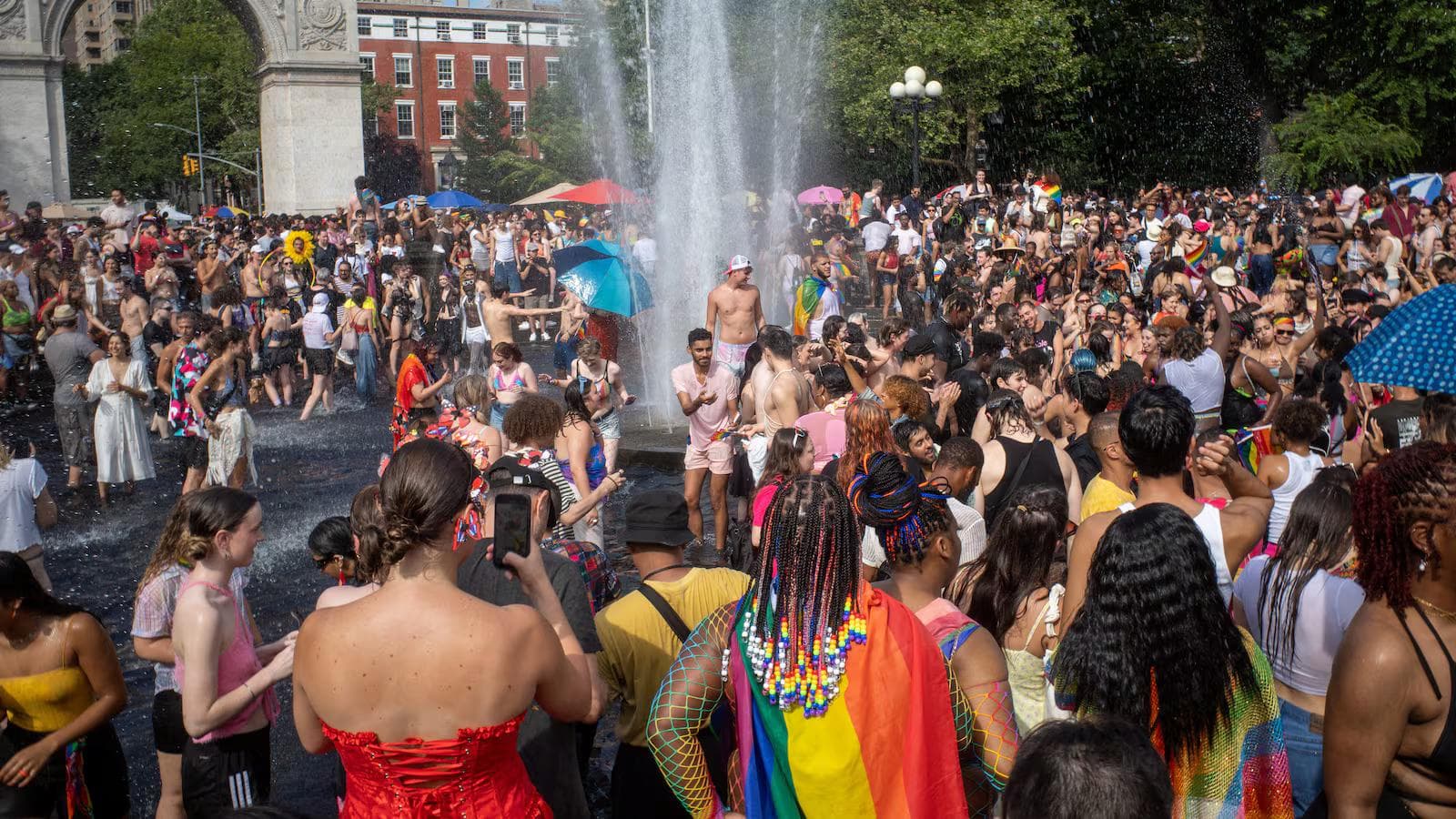
Queer Community in Washington Square Park
Washington Square Park has always served as a sanctuary for the LGBTQIA+ community. In the late 19th century, it was an established gathering place where queer people sought and found community during a time of unjust persecution. The west side of the park, famously known as "The Meat Rack," became a famous cruising area and important social hub where queer people could finally be acknowledged and recognized by their own community.
The park’s role shifted to become a host of the queer political movement during the summer of 1969. Following historic, multi-day protests at the Stonewall Inn a few blocks away, Washington Square Park became the primary meeting place for a new wave of queer activism. On July 27, 1969, one month after the Stonewall Inn protests, hundreds of folks gathered at the Arch for a "Gay Power" vigil. Activists like Martha Shelley and Marty Robinson delivered impassioned speeches demanding queer liberation. These rallies led to the formation of the Gay Liberation Front, cementing the park as one of the birthplaces of the modern queer liberation movement.
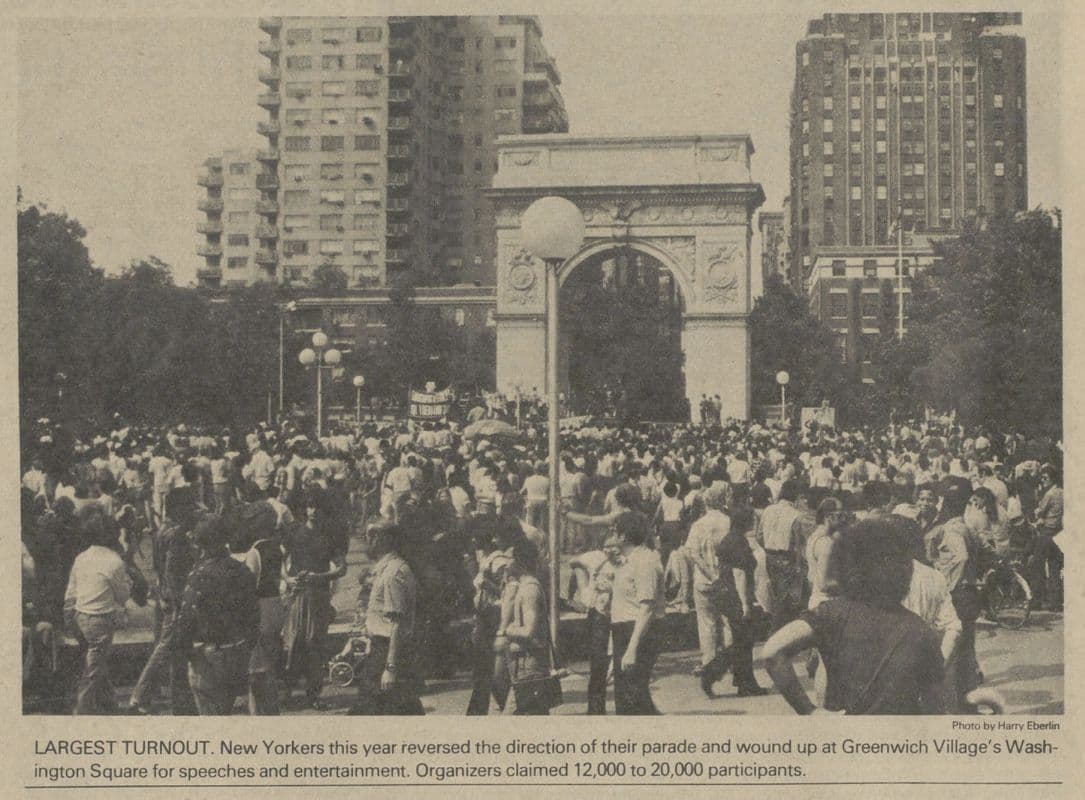
“Crowd at the 1973 Christopher Street Liberation Day rally and festival.” Photo by Harry Eberlin.
Throughout the ‘70s and ‘80s, the park remained a hub for both celebration and survival. In 1973, the park was the ending location for the third-ever Pride March, and it has since become a host for many demonstrations. During the AIDS epidemic, the park’s lawns became spaces of community care and mourning, as organizations like ACT UP coordinated rallies to demand government action. In the face of immense loss, the community continued to gather at the park, a testament to it as an essential place for collective healing and political progress.
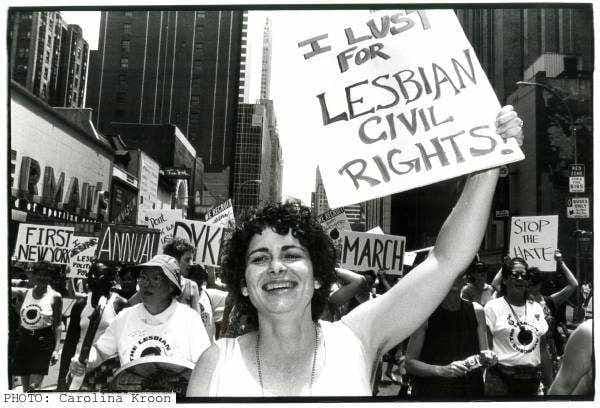
The first Dyke March in 1993. Photo courtesy of Carolina Kroon.
Many queer individuals were drawn to the neighborhood surrounding the park, themselves a testament to individual action in pursuit of queer liberation. Figures like Lorraine Hansberry and Eleanor Roosevelt resided in apartments around the park, bringing their legacies of advocacy and progressive art to the neighborhood. Throughout history, queer activists like Barbara Gittings, Morris Kight, Madeline Davis, and Lee G. Brewster – to name a few – have ushered in immense progress on Washington Square Park’s historic grounds.
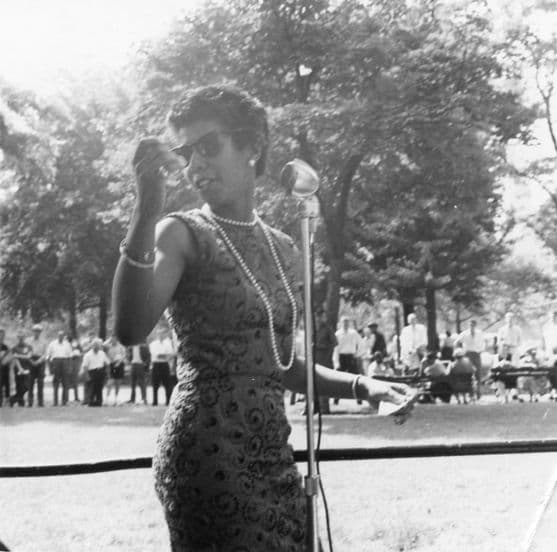
Lorraine Hansberry speaking at “Village Rallies for NAACP,” in Washington Square Park, June 13, 1959. Photographer unknown.
That spirit of resistance and joy exudes from the park today, as vibrant as ever. During Pride Month, the park becomes an epicenter of community life, transforming the daily energy into a month-long celebration of queer community.
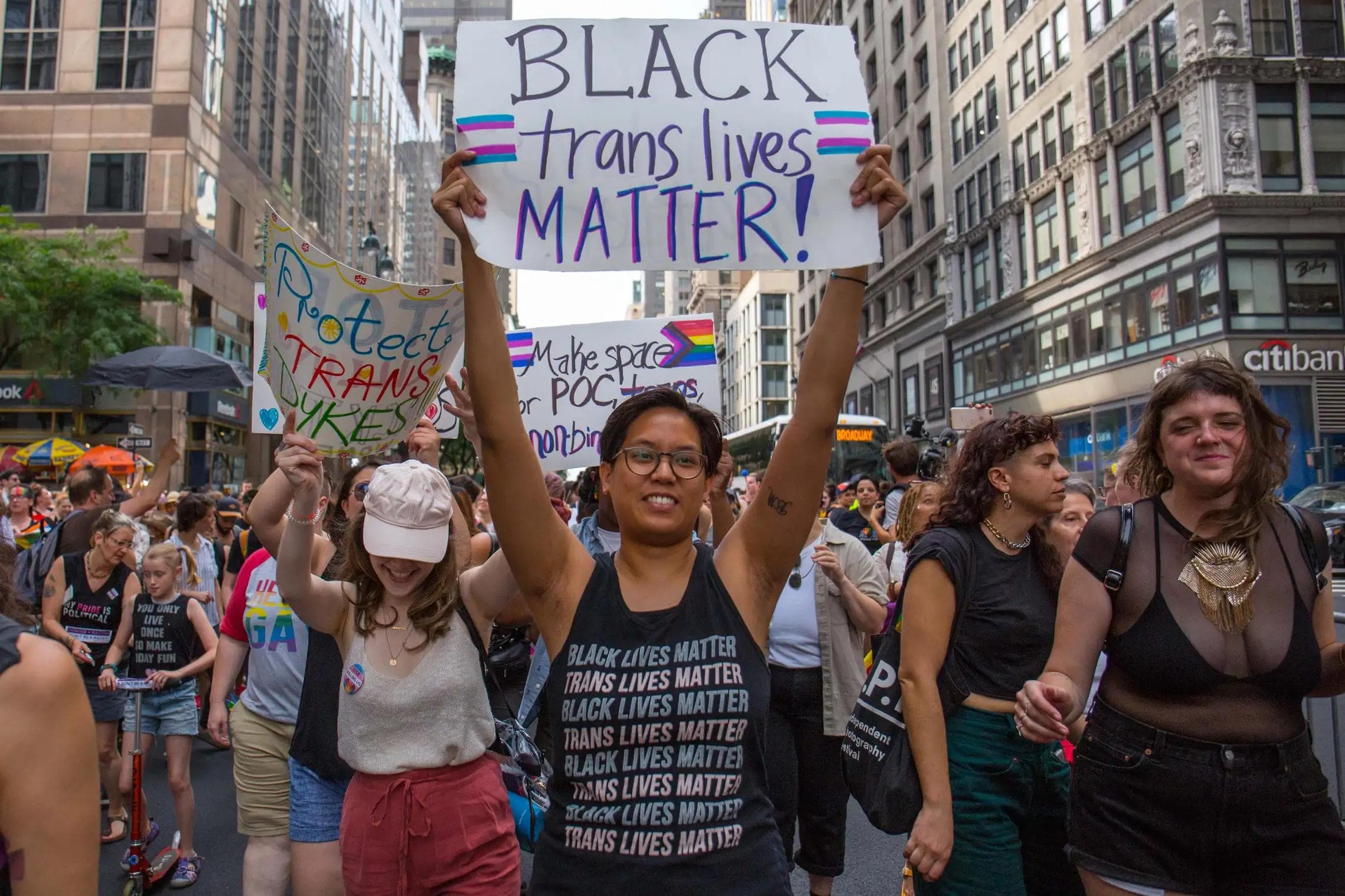
10th Annual Dyke March NYC Photo by Scott Lynch / Gothamist
Whether welcoming a joyful Pride celebration with thousands of community members, or a quiet afternoon on the beautiful lawns in conversation with a partner, Washington Square Park remains forever and always a home for the queer community.
To learn more about Queer History in New York and the West Village:
- NYC LGBT Sites website: Washington Square Park
- “The Stonewall You Know Is a Myth. And That’s O.K.” video by the New York Times
- The Stonewall Reader, edited by New York Public Library and Jason Baumann
- Gay New York by George Chauncey
- The Gentrification of the Mind: Witness to a Lost Imagination by Sarah Schulman
- The Bowery Boys podcast
A place for community
I love hanging out in the park after Pride. It's such a great place to celebrate community with my favorite people.
Nat, Park Lover