A Park for the People: Roots of Activism in Washington Square Park
Washington Square Park has always been an active gathering space for New York City’s progress. For over two centuries, the park has served as the city’s most enduring "town square," a site where communities actively use their collective power to demand justice against systemic inequality.
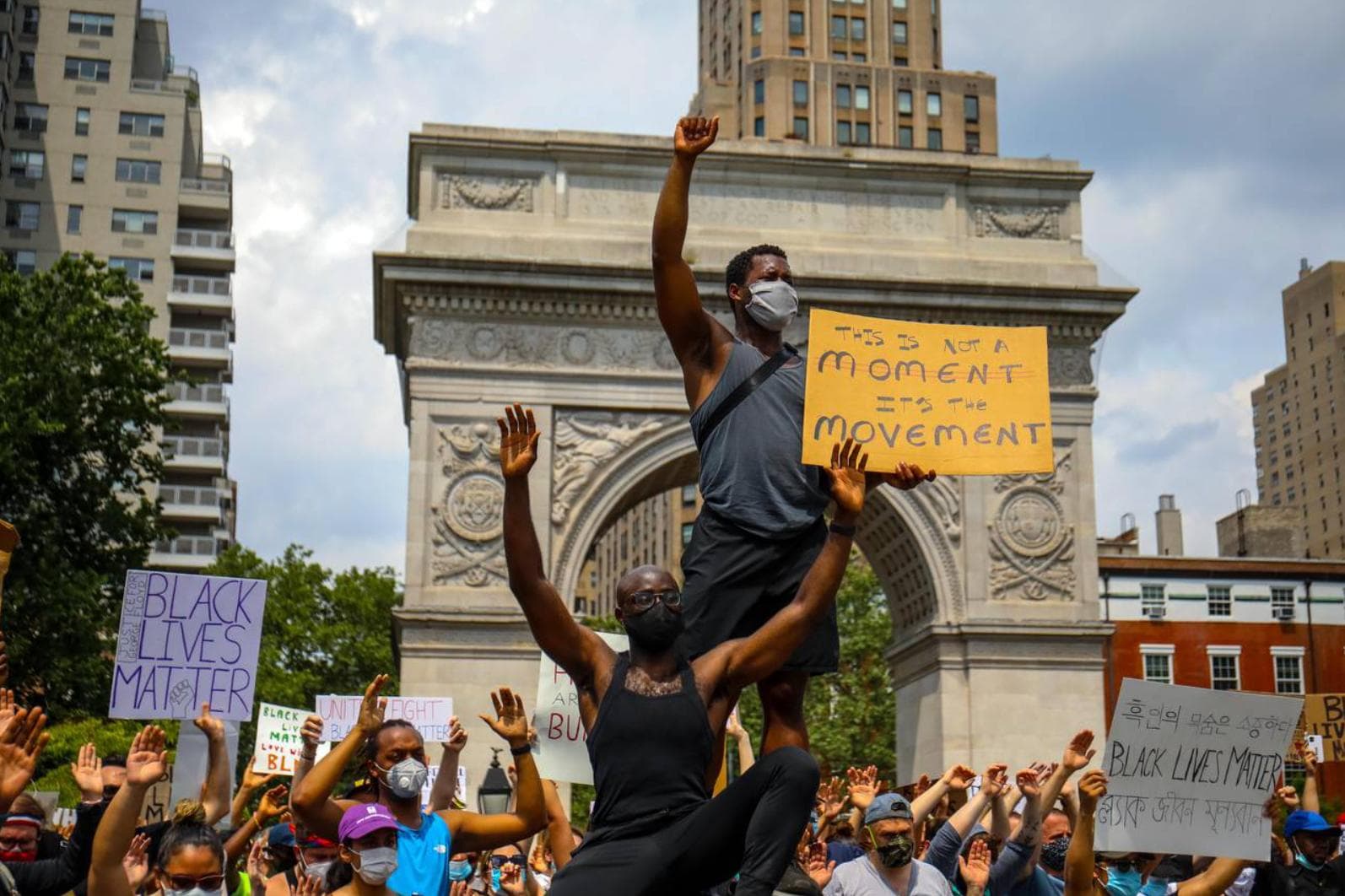
Activists gather at a Black Lives Matter protest.
In the early 19th century, abolitionists used the historic grounds to galvanize against the injustice of enslavement, and later, the park held massive rallies during the "Hunger Marches" of the Great Depression. Since its inception, the park has been a sanctuary for communities to organize social justice movements.
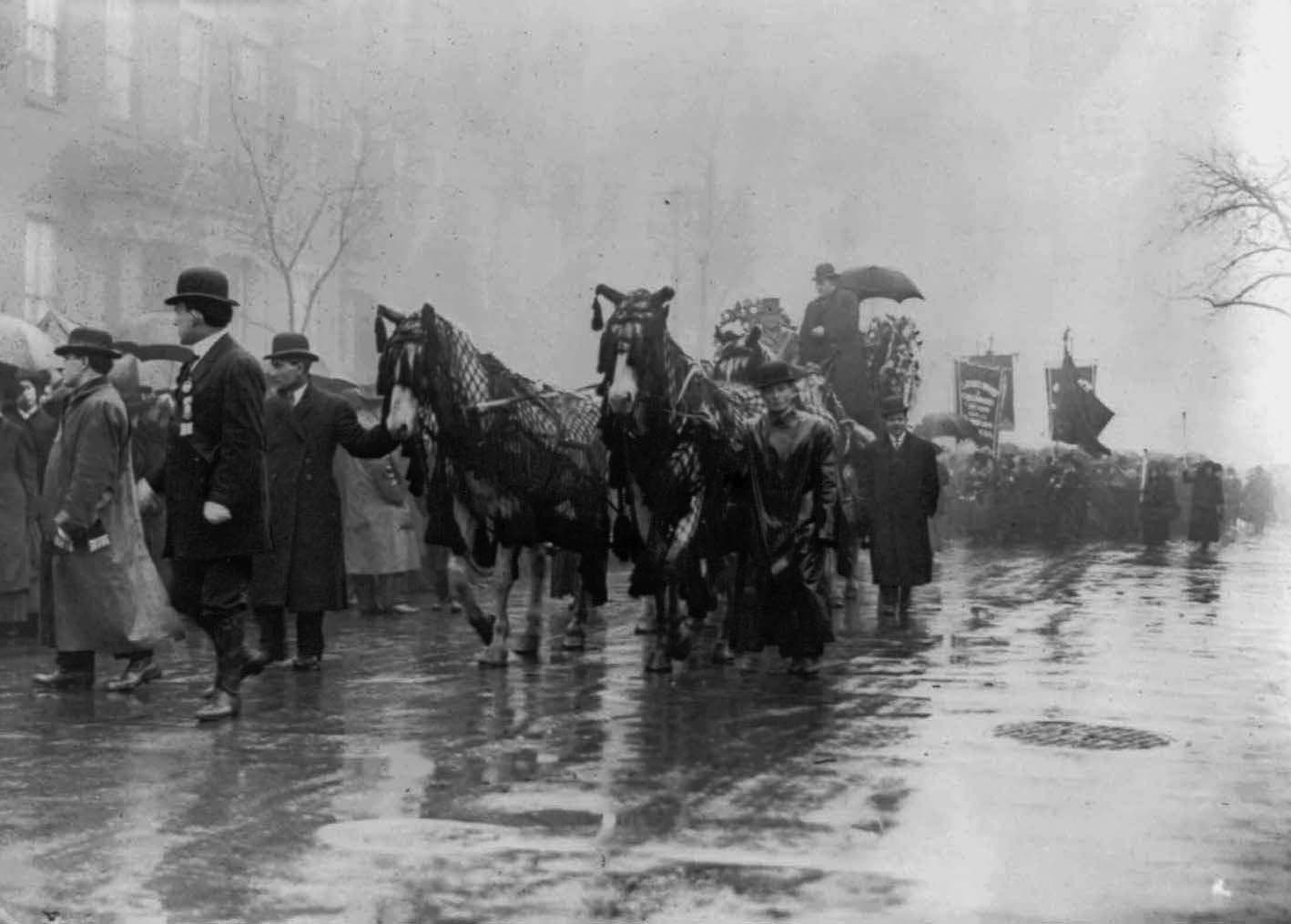
Procession in honor of the victims of the The Triangle Shirtwaist Fire. Bain News Service photograph / George Grantham Bain Collection (Library of Congress).
By the turn of the 20th century, the park became a hub for labor and gender justice movements. Following the 1911 Triangle Shirtwaist Factory Fire a block away, Washington Square became a site of profound collective mourning and protest. In 1912, over 20,000 workers – a quarter of them young, immigrant women – marched down Fifth Avenue and through the Arch to demand the fire safety laws and labor protections that inform our modern workplace protections.
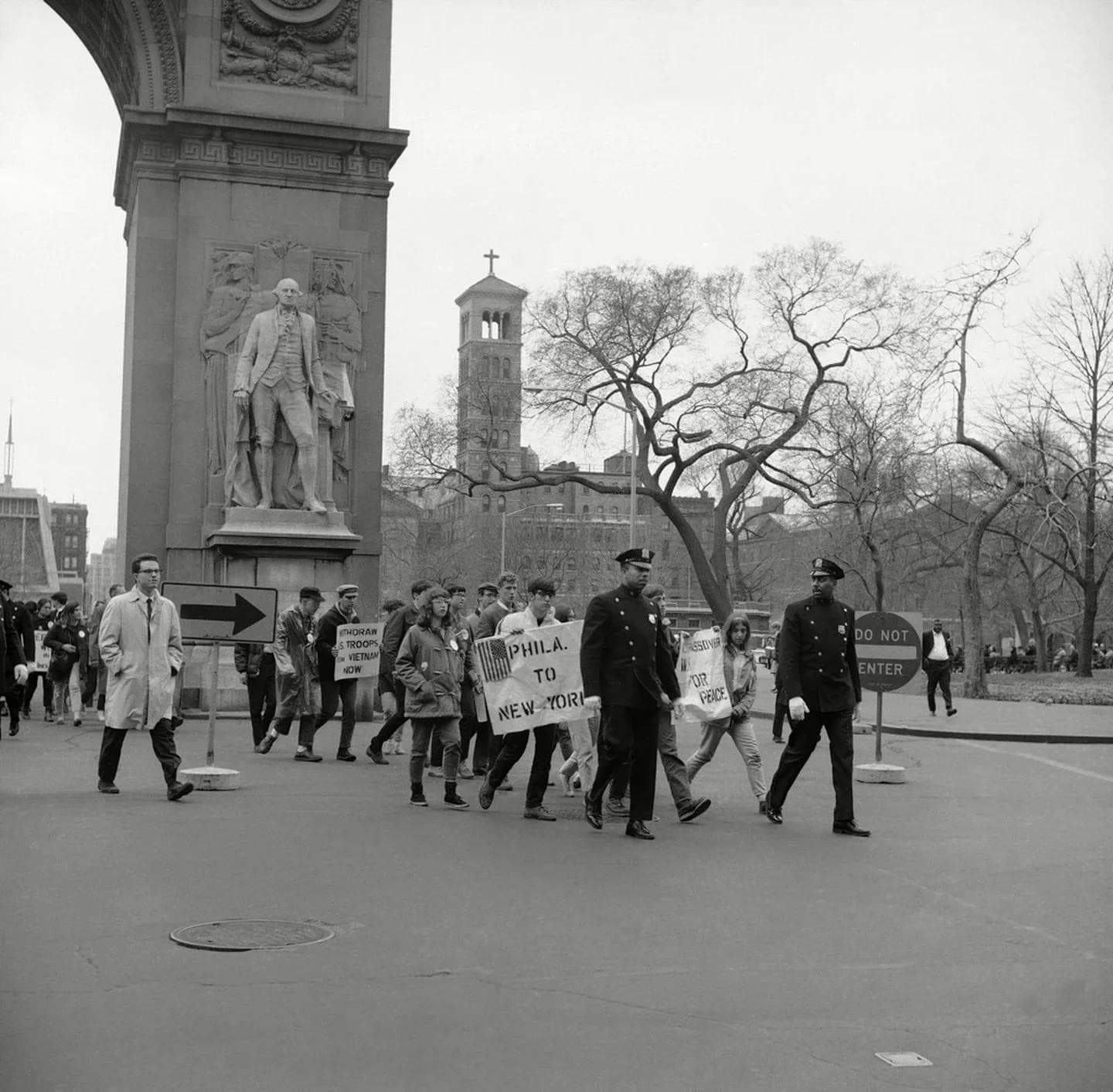
Vietnam Protest March From Washington Square Park to Bryant Park.
This energy fueled the suffrage movement as well. In 1915, over 25,000 women used the park as a starting point to march for the right to vote. Throughout this era, important figures lived and organized in the neighborhood, viewing the park as a vital space for the service and dignity of women and other historically marginalized communities.

HIVEMIND No Justice No Peace. Photo credit: Hive Mind Bookstore
In the mid-20th century, the park’s activism turned inward as the neighborhood fought to save the space itself. When city planners proposed a highway cutting through the center of the park, a grassroots coalition of neighbors led by Jane Jacobs, Shirley Hayes, and Edith Lyons organized a decade-long resistance. Their successful blockade of this highway in 1958 permanently closed the park to traffic, and was a fundamental victory for the "right to the city" as well as the preservation of public space in service of people. This battle remains a global blueprint for community-led urban activism.
Simultaneously during this time, the park hosted anti-fascist and anti-war rallies and protests, along with demonstrations in support of the civil rights movement. In 1961, the Washington Square Park Folk Festival brought together artists and activists to promote racial and social justice.
A Modern Day Gathering Place
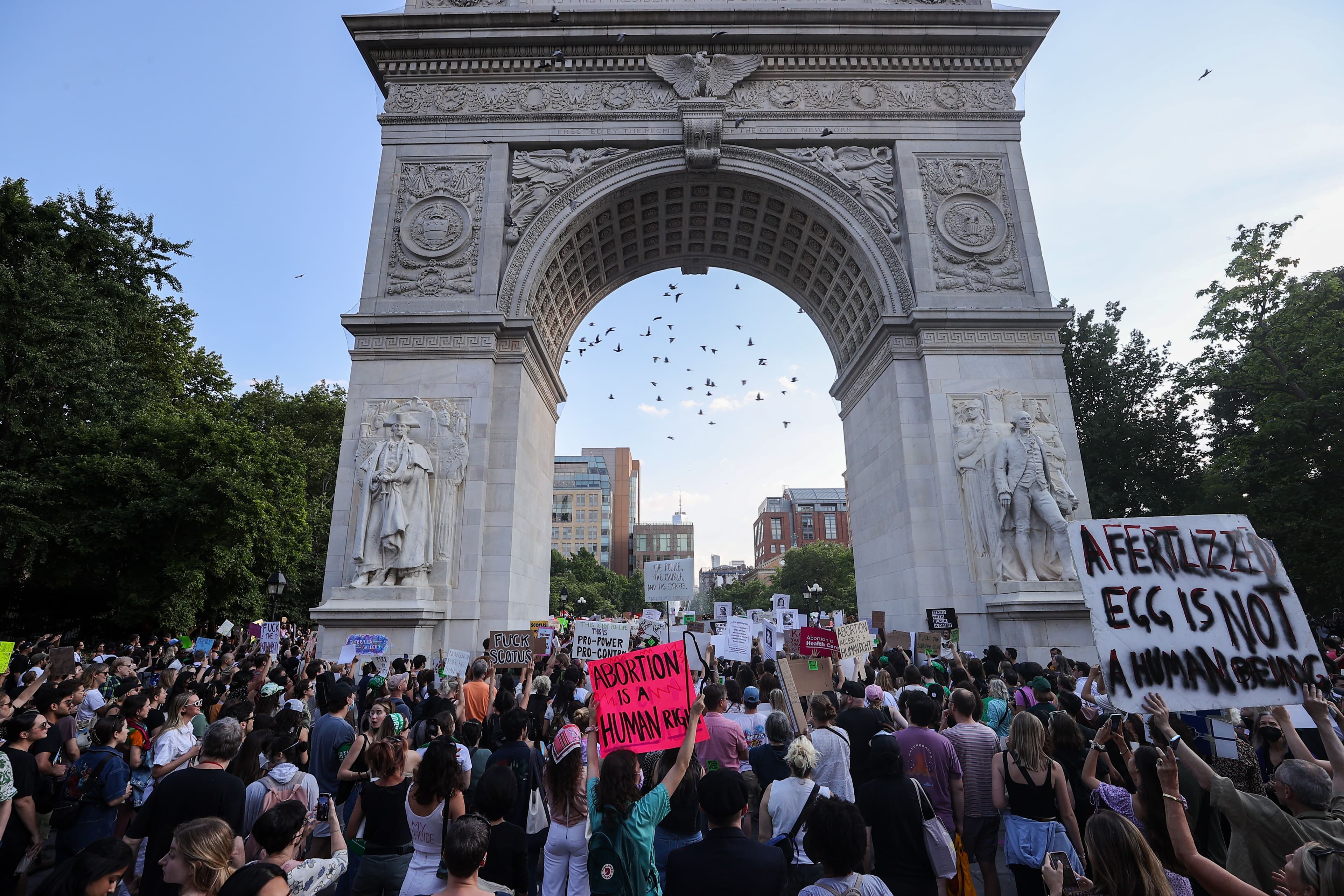
Today, Washington Square Park continues to play a pivotal role in the fight for a myriad of social justice rights. From the Black Lives Matter movement and climate advocacy to rallies in support of reproductive rights and anti-war protests, the park remains an epicenter of activism, a place where people can unite in the fight for a better future. Whether that manifests as a mass mobilization of thousands or a single, determined voice, Washington Square Park provides a space for communal galvanization and progress.
Activists gather at a Black Lives Matter protest.
As we envision a thriving future for all, the Washington Square Park Conservancy is honored to steward a landscape that is both a historic landmark and an active host of progress. We work diligently in service of the park precisely so people can continue the vital, important, and energizing work towards collective progress and healing. In Washington Square Park, activism isn't something we merely remember as part of our history; it’s a practice of hope that we support every single day.
To learn more about activism in Washington Square Park:
- It Happened on Washington Square by Emily Kies Folpe
- The Death and Life of Great American Cities by Jane Jacobs
- Remember the Triangle Fire Coalition website